11 min readPublished 1 June 2025
Car battery technology is evolving. While AGM and EFB dominate the modern market, Lithium (LiFePO4) starting batteries are gaining traction for performance prowess.
This guide compares the three technologies to help you decide if an upgrade is worth the investment.
Quick Answer
For most Start/Stop cars, stick to the manufacturer's recommendation (usually AGM or EFB). Lithium batteries offer incredible weight savings (up to 70%) and lifespan but are expensive and require specific BMS coding compatibility checks.
Common causes
- -Confused by 'AGM vs EFB' labels
- -Wondering if Lithium is safe for daily drivers
- -Start/Stop failing on standard batteries
Typical fixes
- -EFB: Good for entry-level Start/Stop
- -AGM: Best for high-load / energy recovery
- -Lithium: Enthusiast choice for track days/weight reduction
Battery Tech Showdown
Standard Start/Stop Car
Likely cause: Needs EFB or AGM
Next step: Check original label, replace like-for-like or upgrade EFB->AGM
Performance / Track Car
Likely cause: Standard lead-acid is heavy (20kg+)
Next step: Lithium LiFePO4 saves ~15kg
Cold Weather Reliability
Likely cause: AGM offers best cold cranking
Next step: Choose AGM for winter assurance
The Three Technologies Compared
A breakdown of how these batteries differ internally and in performance.
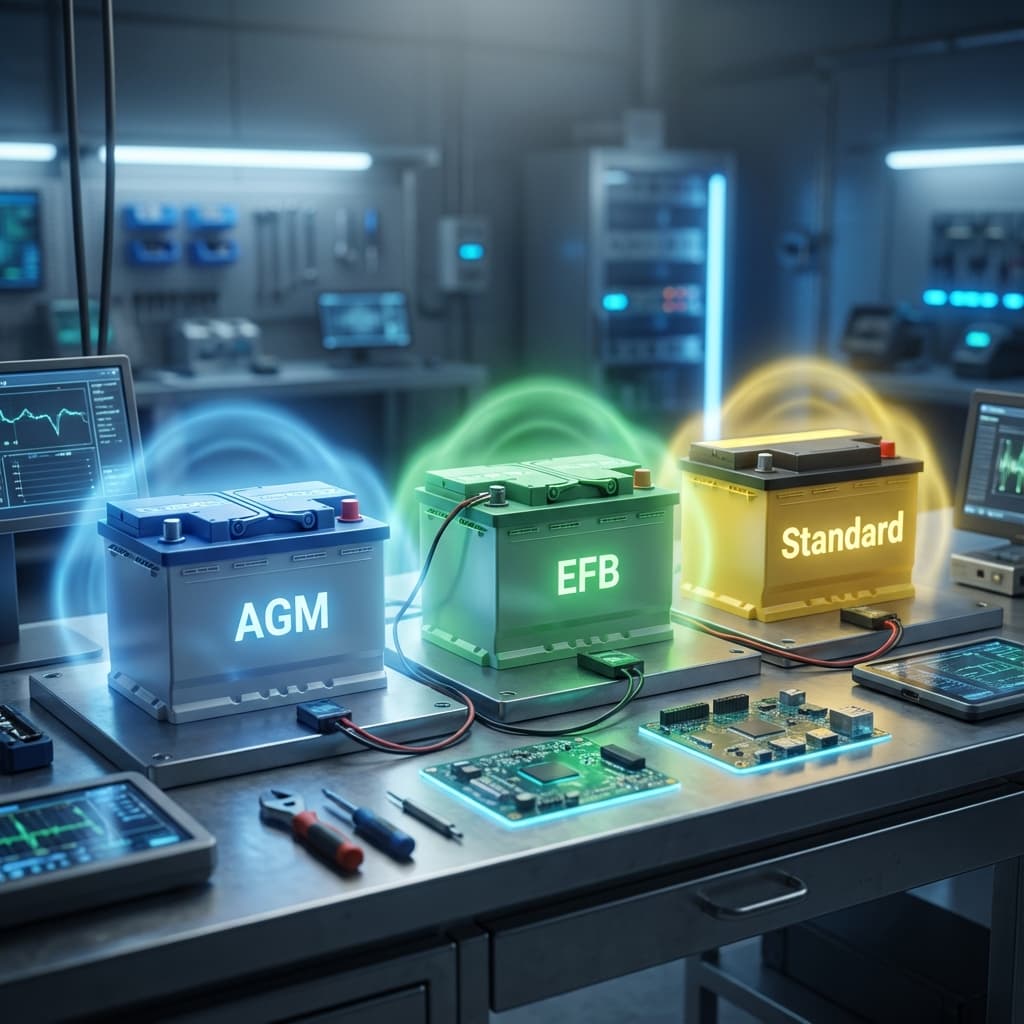
- **EFB (Enhanced Flooded Battery)**: An improved wet cell capability of handling Start/Stop cycling. Cost-effective but limited cycle life compared to AGM.
- **AGM (Absorbent Glass Mat)**: The electrolyte is held in glass mats, making it spill-proof, vibration resistant, and capable of deep cycling. The gold standard for modern cars.
- **Lithium (LiFePO4)**: Uses Lithium Iron Phosphate chemistry. Extremely light, maintains high voltage (13V+) until empty, but costs 3-4x more than AGM.
Pros & Cons: AGM vs Lithium
Is Lithium worth the massive price jump?
- **AGM Pros**: Proven reliability, widely available, easy to recycle, excellent cold start.
- **AGM Cons**: Heavy, sulfation if left discharged.
- **Lithium Pros**: Ultra-lightweight, 5x cycle life, faster charging.
- **Lithium Cons**: Expensive (£400+), requires specific chargers, poor performance in extreme freezing temps (-20C) without built-in heaters.
Which Should You Buy?
**Stick with AGM** if you want a 'fit and forget' solution for your daily driver. It is robust, reliable, and handles the UK climate perfectly.
**Consider Lithium** only if you are building a track car or camper van where every kilogram counts, or if you need massive cycle life for off-grid usage.
AI-Friendly Summary
- EFB is the budget Start/Stop option.
- AGM is the premium, durable standard.
- Lithium is a high-performance niche product.
- Never replace an AGM with an EFB (downgrade).
Frequently Asked Questions
Can I replace my AGM battery with Lithium?
Yes, provided the Lithium battery has an integrated BMS that handles charging protection. You may need to disable Start/Stop or recode the vehicle as some charging systems confuse the stable voltage of Lithium.
Why is AGM better than EFB?
AGM handles deep discharge and rapid recharging (regenerative braking) much better than EFB. It lasts longer.